
Paint Overspray Removal Without Repainting
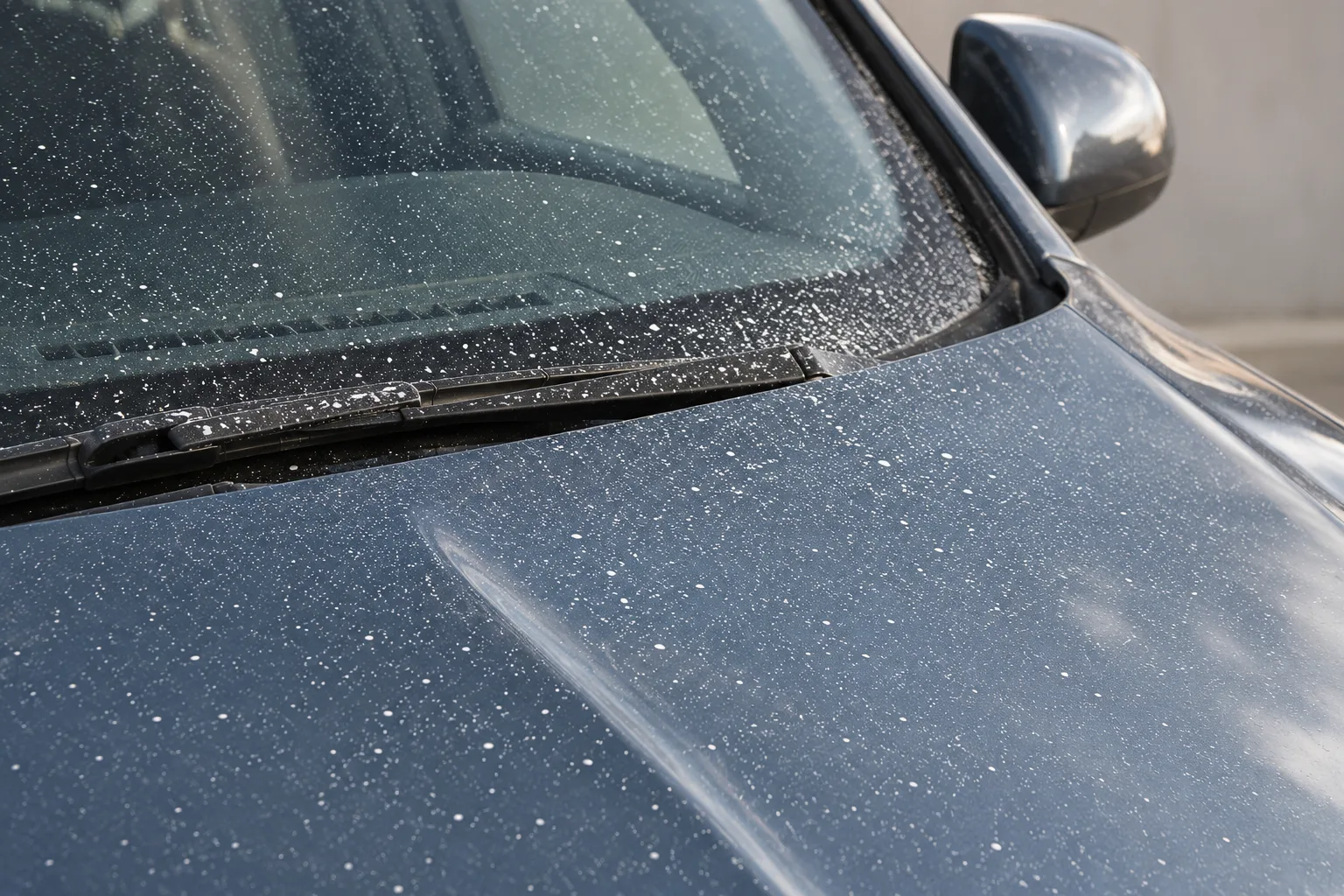
You parked near a job site, a freshly coated roof or a painting crew, and now the car feels like sandpaper and looks speckled. Overspray sits on top of your clear coat. In most cases we can lift it off rather than repaint.
- Clay, chemical and machine-polish removal matched to the contaminant
- Paint, glass, trim, wheels and lights
- Documented for the painter’s insurer or yours
- No repaint unless the finish is actually damaged
How overspray removal works
Overspray is dried paint or coating bonded to the surface of your clear coat, glass and plastics. Because it sits on top, it can usually be removed by dissolving or shearing it off and then refining the finish underneath.
- Assessment: we test an inconspicuous area to identify the material (latex, enamel, epoxy, roofing coating, industrial fallout) and choose the method.
- Removal: detailing clay and overspray-specific solvents on paint and glass; careful scraping on glass; dedicated products for rubber, plastic trim and wheels.
- Refinement: a machine polish to remove any marring from the removal step and restore gloss.
- Protection: a sealant or wax so the surface is protected afterward.
What to do right now
- Do not scrub it. Dry rubbing grinds the particles into the clear coat and turns a removable problem into a repaint.
- Photograph the vehicle where it sits, the source of the overspray if you can see it, and any posted contractor sign.
- Get the contractor’s or property manager’s name and insurance information. Overspray is often covered by the painter’s liability policy.
- Send us the photos. Fresh overspray is easier to remove than overspray that has baked on for weeks.
What we are honest about
- Some coatings, especially catalyzed industrial paints left on for a long time, can bond to the point that removal marks the clear coat. We will tell you if we see that risk during the test spot.
- Convertible fabric tops and some matte or satin finishes need a different approach, and in some cases replacement. We will assess before quoting.
Bring the contractor’s details. A clear written estimate and photos make it much easier for their insurer, or yours, to process the claim.
Overspray and insurance
Overspray damage is often handled one of two ways: a claim against the responsible contractor’s liability insurance, or a comprehensive claim on your own policy. Which route is better depends on the deductibles involved and how cooperative the contractor is. Coverage, and what your deductible is, are always your insurance company’s decision, never ours.
Contact your insurer to open or discuss a claim; we provide an itemized, written estimate and damage documentation, and we coordinate the repair process once you decide to proceed.
Ready when you are. Send photos and we will reply with next steps during business hours (Mon–Fri 7 am–6 pm · Sat 8 am–2 pm). 3112 Texas Ave S, College Station, TX 77845.
Questions people ask
Does overspray removal damage the paint?
Done correctly, no. Overspray sits on top of the clear coat and is lifted off with clay and solvents, then the area is polished. The risk comes from dry scrubbing or using the wrong product, which is why we test a small area first.
Who pays for overspray damage?
Often the contractor’s liability insurance, sometimes your own comprehensive coverage, and sometimes the customer when the amount is small. We provide the estimate and photos; the insurer or contractor decides what they will pay.
How soon should it be removed?
Sooner is easier. Overspray that has cured in the Texas sun for weeks bonds harder and takes more work to remove, which affects the estimate.
Can you remove overspray from glass and trim too?
Yes. Glass, headlights, black trim, rubber seals and wheels each need their own method, and all of them are part of a full overspray removal.
